
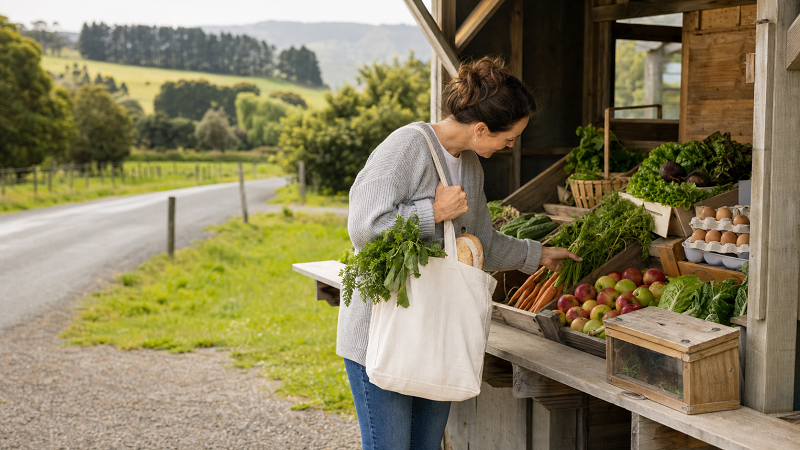
How to Shop Local in New Zealand Without Blowing the Budget
Shopping local works best when it is treated as a useful household system, not a test of purity. You do not need to replace every supermarket trip, spend Saturday driving between farms, or buy a crate of courgettes out of politeness. The aim is simpler: buy a few things closer to where they were grown, learn when they are at their best, and make the trip easy enough to repeat.
Begin with an anchor, not a complete grocery list
A local-shopping habit is more likely to stick when one item reliably pulls you out the door. That might be eggs, apples, kūmara, tomatoes, bread, honey or a weekly bag of greens. Your anchor should be something your household already uses and something a nearby producer regularly sells.
Once the anchor is dependable, add one or two seasonal extras. This avoids the classic failure mode: an enthusiastic haul of beautiful ingredients with no plan, followed by a fridge full of guilt. If you are new to Country Stalls, use the stall map to find one practical stop near a route you already travel, or browse the local marketplace before leaving home.
Build a 30-minute local loop
“Local” is not very helpful if collecting the food costs more time and fuel than it is worth. Draw a small loop around school, work, sport, a regular walk or the trip to visit whānau. Give the loop a time budget—30 minutes is a useful starting point—and include no more than two optional stops.
- Choose the anchor stop. It should supply the item that makes the trip worthwhile.
- Add one flexible stop. A second stall can fill gaps without turning the outing into an expedition.
- Keep a supermarket fallback. Local shopping and supermarket shopping can complement each other.
- Save good finds. Add stalls to your favourites so the next trip starts with a shortlist, not another search.
When you find an unmapped roadside stand, submit it through I Found a Stall. That small action makes the next shopper’s route easier too.
Compare usable value, not just price
A $6 bag is not good value if half of it wilts before dinner. A $9 bag may be excellent value if the produce is fresher, stores well, and replaces several smaller purchases. Use this quick calculation:
Usable cost = price paid ÷ portions actually eaten.
Also count the hidden costs: fuel, collection time, packaging you do not need, and waste at home. The point is not to prove that local is always cheaper—it is not. The point is to compare the thing that matters: how many good meals you get for the money and effort.
A five-question value check
| Question | Why it matters |
|---|---|
| Will we eat this in the next three meals? | Urgent produce needs a named use, not a vague intention. |
| Can part of it be stored or frozen? | A large bag can be economical when it has two destinations. |
| Is the edible yield high? | Trim, bruising and oversized cores change the real cost. |
| Does it replace something already on the list? | Adding food is not saving money; substituting can be. |
| Would we make a special trip for it? | If not, buy it when you are already passing. |
Ask questions that change what you do
“Is it local?” is less useful than a specific question. A good producer can often tell you what was picked most recently, which variety is best for cooking, which fruit needs two days on the bench, or which bag contains smaller “seconds” at a lower price.
- When was this harvested or packed? Useful for planning delicate greens, berries and sweetcorn.
- Is it ready to eat now? Particularly helpful for pears, avocados and stone fruit.
- Which variety suits my job? A sauce tomato, storage apple and roasting potato earn their value differently.
- How would you store it? Growers often know the quirks of their own variety and harvest.
- Do you have smaller, mixed or seconds bags? These can suit a small household or a cooking project.
Ask with curiosity, not as an interrogation. If the stall is unattended, clear labels and tidy stock tell part of the story; our honesty-box stall guide explains what good unattended selling looks like from both sides of the counter.
Judge freshness with the right clues
Freshness does not always mean flawless appearance. Use category-specific signs:
- Leafy greens: crisp stems and lively leaves; a little field dust is less important than slime or yellow collapse.
- Roots: firm weight, intact skin and no wet soft patches. Irregular shapes are usually a cosmetic issue.
- Apples and pears: firm fruit without leaking punctures. Surface russeting can be normal for some varieties.
- Tomatoes: fragrant at the stem end, with skin that is intact. Deeply split or leaking fruit needs prompt use or should be left behind.
- Eggs and packaged foods: clean, intact packaging and any required seller or product information.
If you are unsure about safe handling, follow current New Zealand Food Safety shopping guidance. Keep raw meat and fish separate from produce, and wash reusable bags regularly.
Use the “tonight, later, preserve” unpack
Deal with a local haul as soon as you get home. Make three groups:
Tonight
The most perishable item gets first claim on dinner.
Later
Store sturdy produce correctly and put it into the meal plan.
Preserve
Freeze, cook or share the portion you cannot realistically use fresh.
Our seasonal produce buying and storage guide gives a produce-by-produce system. If you spot blemished or oddly shaped bargains, use the decision checks in the guide to buying and using seconds.
A repeatable first month
- Week one: map three nearby stalls and visit one for an anchor item.
- Week two: return on a normal errand and add one seasonal product.
- Week three: compare usable cost and note what was wasted, if anything.
- Week four: keep the stall in your routine only if the food, price and trip work for your household.
This is deliberately unromantic. A local food system grows through repeat purchases, and repeat purchases happen when the experience is useful. Start small, learn the seasons, and let trust build one good bag at a time.