
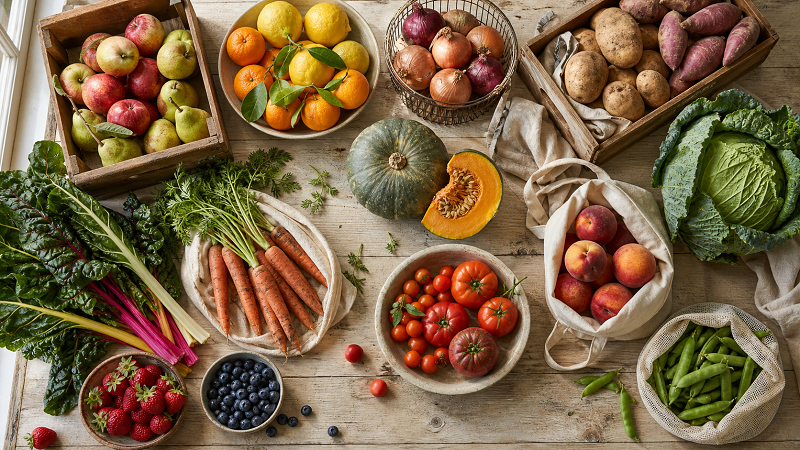
The New Zealand Seasonal Produce Buyer’s Field Guide
Seasonal shopping is not about memorising a perfect calendar. New Zealand stretches across climates, harvests shift with weather, and protected growing extends some crops. A better skill is learning to recognise abundance, choose produce for the job, and store each purchase according to how it ripens.
A useful seasonal compass
The list below is deliberately broad. It helps you plan, but local climate and the season’s weather always win.
| Season | Often abundant | Good jobs |
|---|---|---|
| Spring | Asparagus, leafy greens, herbs, radishes, early strawberries | Quick cooking, salads, herb sauces, lighter meals |
| Summer | Tomatoes, courgettes, beans, sweetcorn, berries, stone fruit | Eat fresh, grill, make sauces, freeze fruit |
| Autumn | Apples, pears, feijoas, pumpkins, kūmara, late tomatoes | Bake, roast, stew, bottle or freeze surplus |
| Winter | Citrus, brassicas, leeks, carrots, potatoes, silverbeet | Soups, braises, tray bakes, slaws and preserves |
For an interactive month-by-month prompt, use the Love Food Hate Waste seasonal guide. Then confirm the local picture at the stall.
Buy for a job, not an ideal
“Best” depends on what you are cooking and when. Fruit for the lunchbox needs to hold; fruit for tonight can be fully ripe. Tomatoes for sandwiches should slice cleanly; tomatoes for sauce may be soft, deeply coloured seconds. A large cabbage is value only when you have more than one use for it.
Before you pay, give every item one of four jobs:
- Eat raw: flavour, texture and immediate ripeness matter most.
- Cook this week: sound produce with minor cosmetic marks can be excellent.
- Store: choose firm, intact specimens and the right variety when possible.
- Preserve: buy volume only when time, containers and freezer space are ready.
The field check: look, lift, smell, ask
- Look. Colour should suit the variety. Avoid wet collapse, active mould and leaking damage.
- Lift. Produce should feel appropriately heavy and firm—not necessarily rock-hard.
- Smell. Tomatoes, ripe stone fruit and herbs often announce readiness. Fermented or rotten odours are a warning.
- Ask. “Which is ready now?”, “Which stores best?” and “What was picked most recently?” produce useful answers.
Cosmetic variation is not the same as spoilage. The seconds guide gives a more detailed keep-or-leave test.
Storage starts with ripening behaviour
Some fruit produces ethylene, a natural plant hormone that speeds ripening. Apples, pears, kiwifruit, bananas and stone fruit can accelerate nearby produce. Use this deliberately when you want to ripen something, and separate them when you want vegetables to last.
| Produce | Buy it like this | Store it like this |
|---|---|---|
| Leafy greens | Crisp stems, no slime | Refrigerate in a container or bag with a paper towel; keep from being crushed |
| Carrots | Firm, not rubbery | Remove leafy tops and refrigerate in an airtight container lined with a paper towel |
| Potatoes | Firm, dry, minimal sprouting | Cool, dark and ventilated; keep apart from onions |
| Onions and garlic | Dry skins, firm necks | Cool, dark and ventilated; outside sealed plastic |
| Tomatoes | Intact skin, fragrance, ripeness for the job | Room temperature for flavour; use ripe fruit promptly |
| Stone fruit | Firm for later, fragrant and yielding for now | Ripen on the bench, then refrigerate ripe fruit |
| Apples | Firm, no leaking punctures | Refrigerate for longer keeping; separate from sensitive vegetables |
| Whole pumpkin | Hard skin, dry stem, no soft spots | Cool and dry; wrap cut pumpkin tightly and refrigerate |
| Berries | Dry, plump, no mould in the punnet | Refrigerate and wash just before eating; freeze surplus promptly |
The 5+ A Day storage guide and Love Food Hate Waste A–Z storage research provide more produce-specific detail.
Use a two-speed fridge
Most food waste is not caused by lack of information; it is caused by invisibility. Set up two zones:
- Use-first box: ripe, cut or delicate produce that should shape the next meal.
- Holding zone: sound produce stored for later, with enough airflow and no heavy items crushing it.
Once a day, look in the use-first box before deciding dinner. This single habit is more effective than remembering dozens of shelf-life estimates.
Rescue produce before it crosses the line
Quality declines gradually, while safety problems can be less forgiving. Intervene while food is still sound:
- Wilted greens can go into soup, curry, pesto or a cooked filling.
- Soft tomatoes can become sauce, soup or a tray-bake base.
- Ripe stone fruit can be stewed or frozen in portions.
- Carrots, broccoli and cauliflower can be blanched before freezing for better results.
- Herbs can be chopped into water, oil or a sauce and frozen in small portions.
Freezing is a pause button, not a repair button: freeze food while it is still good. Label the contents and date. The Love Food Hate Waste freezer guide has a useful list of produce and preparation methods.
Design a seasonal basket with three time horizons
48 hours
Berries, ripe stone fruit, tender herbs and delicate greens.
This week
Tomatoes, beans, courgettes, broccoli, pears and ready-to-cook roots.
Holding stock
Sound apples, citrus, pumpkin, potatoes, onions and garlic stored correctly.
This creates variety without making every item urgent. Use the Country Stalls map to see what growers near you offer, and apply the budget checks in How to Shop Local in New Zealand before turning a seasonal bargain into a bulk purchase.
The habit that builds real seasonal knowledge
Keep a tiny note on your phone: product, stall, month, how you used it, and whether you would buy it again. After one year you will have a seasonal guide tailored to your climate, household and favourite growers—far more useful than a generic poster.