
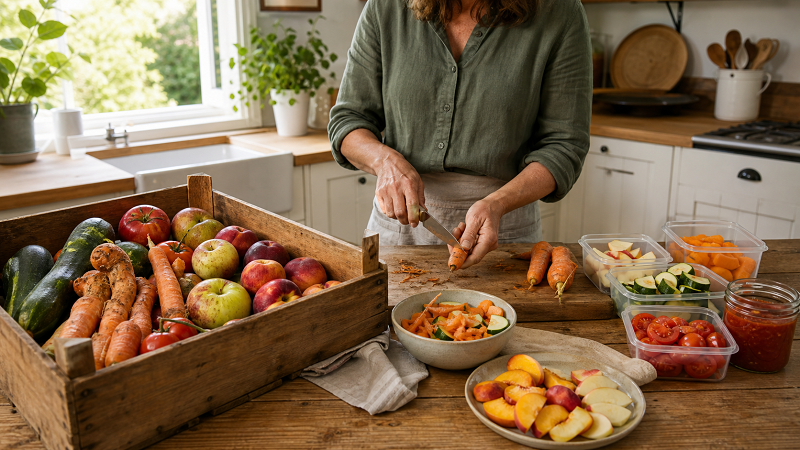
How to Buy and Use “Seconds” Produce Without Wasting It
“Seconds” can be small, oversized, bent, surface-marked or too ripe for a long retail shelf. They can also be excellent ingredients. The trick is to distinguish cosmetic imperfection from spoilage, match the produce to a cooking job, and process volume before a bargain becomes a burden.
Cosmetic, urgent or unsafe?
Use three categories. When in doubt about safety, leave the item and ask the seller.
| Category | Typical signs | Action |
|---|---|---|
| Cosmetic | Odd shape, variable size, superficial scuffing, harmless russeting, colour variation | Buy for normal use if sound and suitable |
| Urgent | Very ripe, slightly wilted, small dry bruise or split that can be trimmed, nearing peak softness | Buy only with a same-day cooking or freezing plan |
| Leave | Active mould, leaking rot, slime, fermentation odour, extensive wet breakdown or pest contamination | Do not buy or try to preserve |
Cooking does not magically make badly spoiled food safe. Freezing also does not reverse deterioration; it pauses food in roughly the condition in which it entered the freezer.
Run the four-part bargain test
- Yield: after trimming, how much will remain?
- Time: can you prepare it before quality falls further?
- Capacity: do you have enough fridge, freezer, jars or people to share with?
- Destination: can you name the meals or preservation method now?
A cheap crate with 60% usable yield, two hours of prep and no freezer space may cost more than a smaller first-grade bag. Apply the usable-cost idea from How to Shop Local Without Blowing the Budget.
Ask the seller the right question
“What is wrong with these?” can sound accusatory. Try:
- “Are these seconds because of size, marks or ripeness?”
- “Which need using first?”
- “Would these suit sauce, baking or storage?”
- “How were they harvested and kept?”
The answer helps you choose a method. It also tells the grower that clear seconds grading is useful to customers.
Match the flaw to the transformation
| Produce | Good seconds job | Preparation move |
|---|---|---|
| Soft tomatoes | Sauce, soup, relish, braise base | Remove stems and any localised damaged section; cook promptly |
| Small or marked apples | Stewed fruit, crumble, baking, chutney | Core, trim and portion; freeze raw pieces or cooked fruit |
| Bent carrots | Roasting, soup, grated salad, fritters | Scrub or peel as needed; cut to an even cooking size |
| Large courgettes | Soup, fritters, chutney, stuffed bakes | Check the centre; remove tough seeds where necessary |
| Very ripe stone fruit | Compote, crumble, smoothie packs | Stone, slice and freeze in a single layer |
| Wilted greens | Soup, curry, pie filling, pesto-style sauce | Sort carefully, wash, cook and chill promptly |
Use the 60-minute crate plan
Do not begin by hunting for twelve recipes. Begin with a production line:
- Sort for five minutes. Separate sound storage produce, urgent produce and anything unsuitable.
- Wash as appropriate. Keep the sink, tools and hands clean; avoid cross-contamination with raw animal products.
- Prepare one neutral base. Roast mixed vegetables, stew fruit without heavy flavouring, or make a plain tomato sauce.
- Portion by future use. Tonight, two fridge meals, freezer-sized packs, and a share bag.
- Label before freezing. Contents, preparation and date prevent “mystery container” waste.
This method preserves choices. Plain roasted vegetables can become soup, frittata, salad or pasta; stewed apples can become breakfast, baking or dessert.
Freeze for how you will cook
Shape and portion determine whether frozen produce is actually convenient:
- Freeze berries and fruit pieces in a single layer before transferring to a container so they do not become one block.
- Slice onions and leeks in recipe-sized portions for cooking straight from frozen.
- Blanch vegetables such as carrots, broccoli and cauliflower for better frozen results.
- Freeze purées, herb sauces, tomato paste or lemon juice in small portions.
- Leave expansion space in suitable containers and label clearly.
The Love Food Hate Waste freezer guide covers a broad range of ingredients, while its frozen fruit advice is a useful starting point for ripe seasonal fruit.
Preserve with a tested method
Jam, chutney, pickles, drying and bottling can make abundance last, but shelf-stable preserving is a food-safety process, not a chance to improvise ratios or processing times. Use a current, tested recipe appropriate to the produce and jar size. If you are new to preserving, start with freezing or a refrigerator pickle rather than assuming any sealed jar is pantry-safe.
Love Food Hate Waste explains the main preserving methods and their purpose. For food-safety questions, use current New Zealand Food Safety guidance.
Plan the meal before the ingredient disappears
Build meals around a transformation rather than a single recipe:
Roast tray
Dinner side → warm salad → soup or frittata filling.
Tomato base
Pasta → shakshuka-style eggs → braise or pizza.
Stewed fruit
Breakfast → crumble → baking or freezer portions.
Seconds only save money when they displace another purchase
Record three things after a bulk buy: price paid, portions used, and what you would otherwise have bought. This prevents a preserving project from being labelled “saving” when it added sugar, jars and six hours of work without replacing normal food spending.
The strongest seconds habit is modest: one box, one main transformation, several labelled portions. Use the storage system in the seasonal produce field guide, find nearby growers through the Country Stalls map, and buy only the volume your kitchen can absorb.